Mountain biking as we know it today is widely regarded to have started in the 1970s in California, USA, but its rise as a sport and contest can be pinpointed to one event – Repack.
The first recorded downhill mountain bike race with a time trial format was held on 21 October 1976.
This year marks its 50th anniversary, but the original Repack races weren’t just important as the birthplace of gravity racing. Home to a pioneering culture driven by a select group of Mountain Bike Hall of Famers who have gone on to shape off-road racing over the last five decades, this underground event lit a spark that revolutionised cycling around the world.
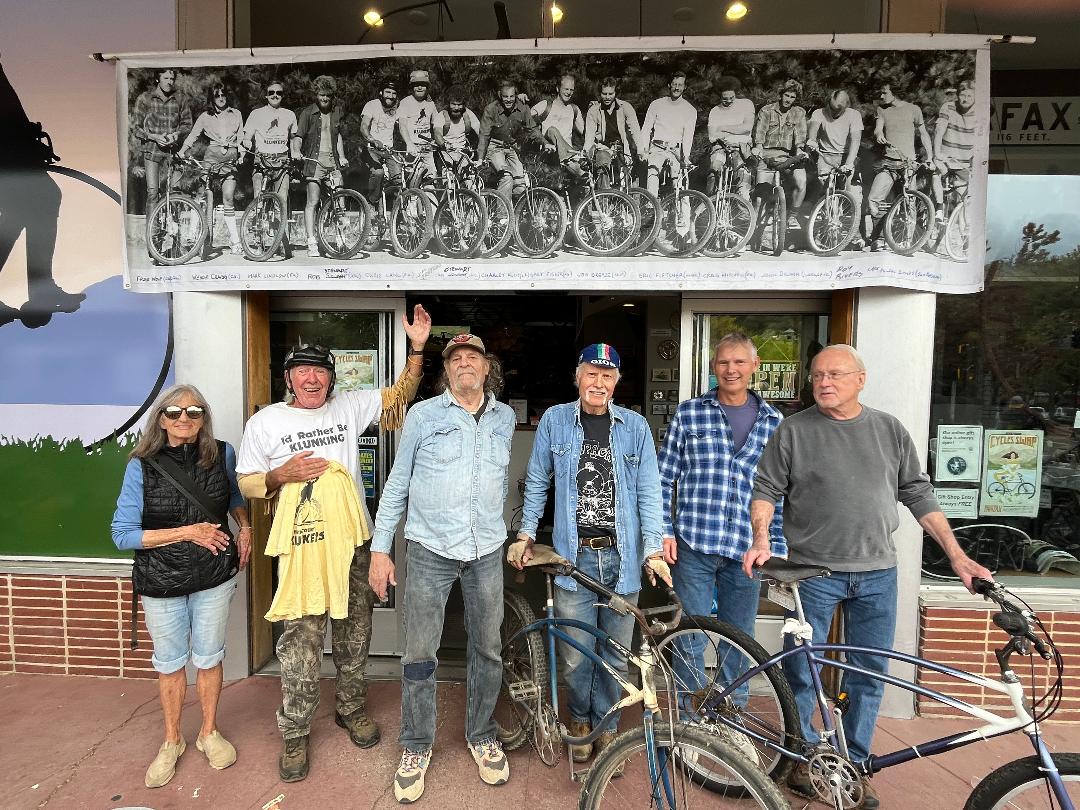
HUMBLE ORIGINS
The early 1970s in America was a melting pot of sub-cultures centred around early extreme sports. The first generation exempt from the military draft for more than three decades, young adults had the freedom and time to explore their interests, and in certain pockets of California, that saw the birth of BMX, vert skateboarding and mountain biking.
Riding bikes off-road was nothing new, though. “The first bicycle was an off road bicycle in 1860,” says Otis Guy, the only person to have competed at Repack, the first US National Championships and the 1990 UCI Mountain Bike World Championships. “It really had more to do with the convergence of people that were into the sport that could promote it.
“When we were riding, we were doing all the trails that we used to hike as kids or as Boy Scouts,” adds Guy. "Something that would take us four or five hours to hike, you could do it on a bicycle in two hours.”
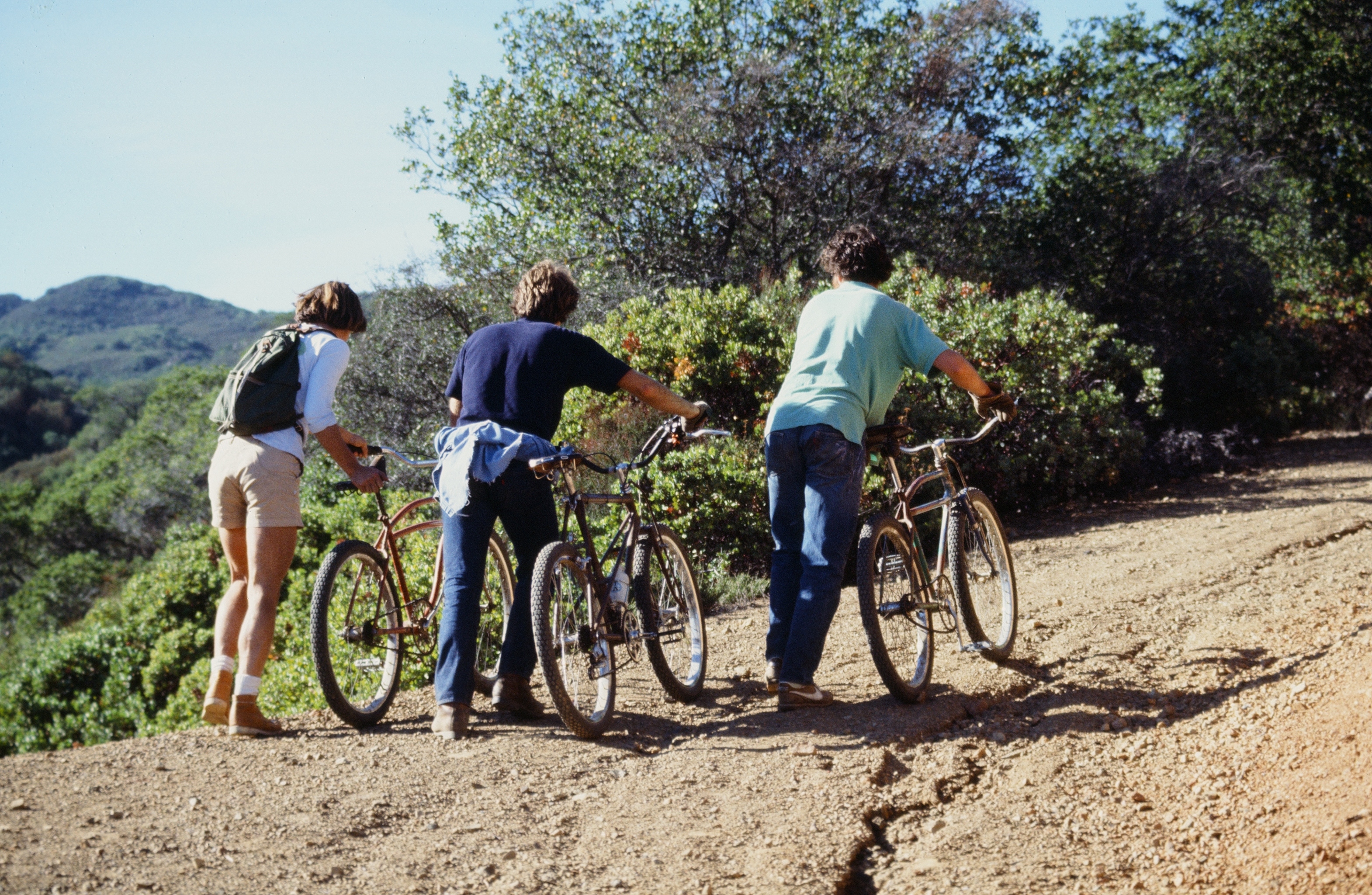
The bikes settled upon as the best for off-road riding were old ‘balloon-tyre’ bikes from the 1930s and 1940s. Cheap, strong and readily available, these ‘klunkers’ could handle trails better than Italian-made racing bikes that were used on the roads.
They did have a slight design flaw though, as highlighted on a long dirt road near Fairfax, Martin County. The hub coaster brakes would get so hot during the twisting, adrenaline fuelled 2.1-mile plummet that after a run or two, the grease would evaporate and need to be repacked with new grease. This would earn the descent the name of Repack Road.
THE TORCHPAPER IS LIT
“The first downhill race took place the first time two bike riders came to the top of a hill together,” says Charlie Kelly, another pioneer of mountain biking who was responsible for everything from the first Repack race and MountainBikes company to Fat Tire Flyer magazine.
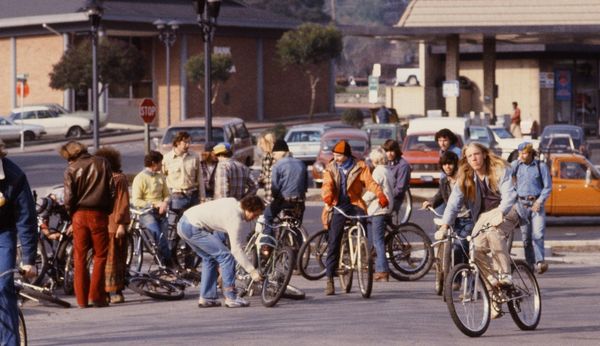
Kelly adds that he doesn’t claim to have invented mountain biking, but he’s certain that he invented organised downhill racing. “So far I haven't found anybody that predates that.”
Prior to Repack, “every ride ended with this elbow-to-elbow life threatening race for no stakes at all on junk.”
He adds that a rider’s size and aggression comes into the equation on these mass-start descents but “the way to find out how fast you are down a hill is not elbow to elbow with a guy a third bigger than yourself, but a time trial.”
Concept sorted, Kelly and co-organiser Fred Wolf went in search of a downhill road to host their first contest on, and Repack Road became the obvious choice.
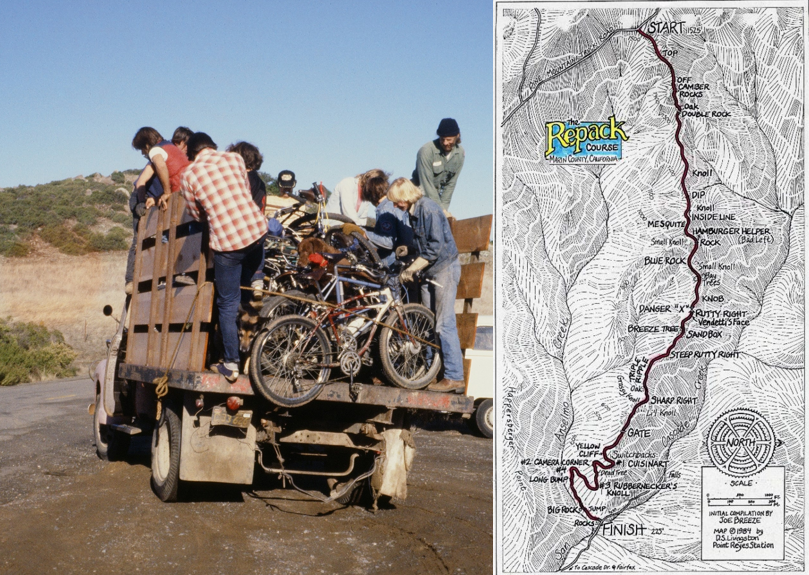
“It’s a place that I’d been on a few times but when the idea came up for a race, it was clearly the place to do it. It's a very steep and long hill, which is an adequate test, but the other thing is that when you're done, you're five minutes from Fairfax. The guys that came up with surfing lived at the beach. We lived in a place that had that hill. As thrilling sports go, it was right up there with anything else I had ever done.”
The first event saw 10 local riders take to the hill, and Alan Bonds came away victorious. But it wasn’t a one off, with a growing number of riders returning to the mountain for 22 editions between 1976 and 1979.
THE SILICON VALLEY OF MOUNTAIN BIKING
During those three years of racing, the core group of riders who would test their mettle on Repack Road would include some of mountain biking’s most iconic names.
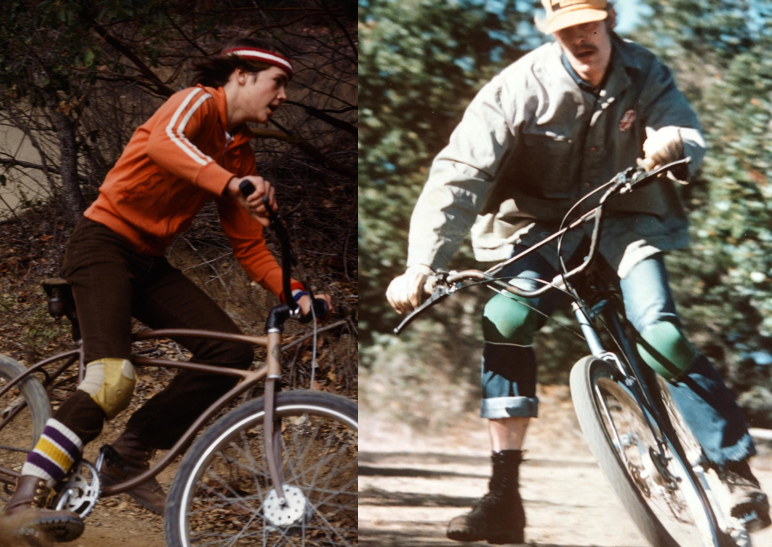
While the Bay Area was not the only place where off-road cycling was taking shape, Marin became a remarkable hub for the emerging sport, bringing together riders, frame builders, innovators and entrepreneurs in one place. In that sense, it became mountain biking’s own “Silicon Valley”: a concentrated ecosystem where ideas, experimentation and opportunity fed off one another and helped accelerate the sport’s development.
“It really was California dreaming,” says Guy. “It all happened at the same time and that really helped make things happen.”
Frame builders like Tom Ritchey and Joe Breeze would craft Repack-ready bikes between race meets to better handle the conditions, while Gary Fisher and Charlie Kelly went on to set up the sport’s first bike brand – MountainBikes – in 1979 to cater to the growing audience interested in off-road riding.
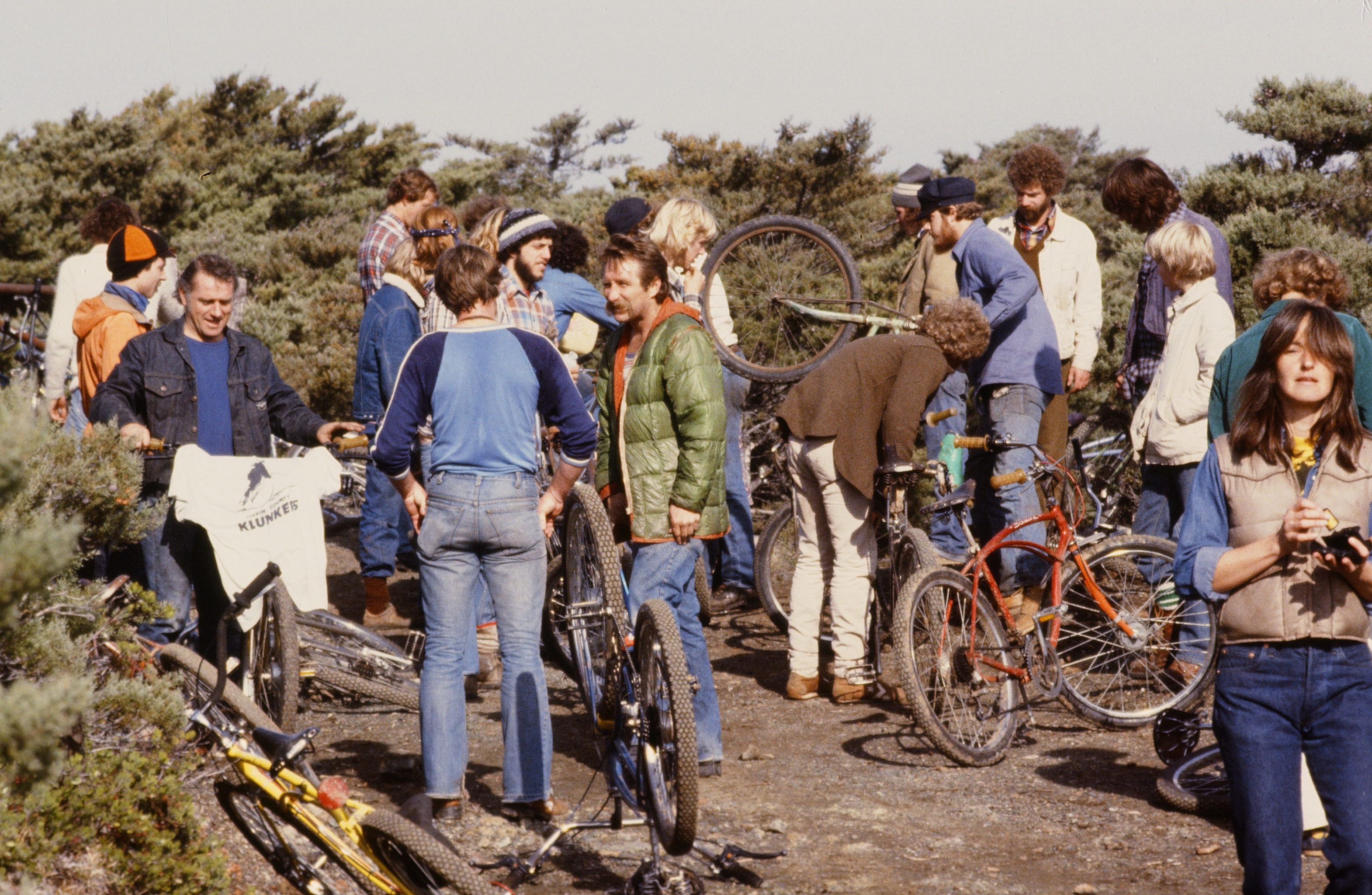
“We had the Silicon Valley of cyclists that could really promote the sport and make things happen – Gary and Charlie starting their bike company and Tom [Ritchey] building bikes for them, and then finally [Specialized founder] Mike [Sinyard] going over to Japan and having [Stumpjumpers] made and really promoting in mainstream magazines. I think that brought America into bicycles, and the United States is a large consumer market.”
“I like to quote Harlan Ellison, who said ‘anything that happens is unlikely’,” adds Kelly. “We were the right people in the right place at the right time. But our activities started out as a handful of people that all knew each other and rode together. Soon guys from other towns started showing up because we had the one thing that no one else had, which was a form of competition. Suddenly it was a magnet, and that magnet put all the people that thought about this stuff in one place. Who knew that it would be so seductive?”
PIONEERING CULTURE
Repack’s run ended in 1979 before it was brought back in 1983 and 1984 in conjunction with the then-recently founded NORBA National race circuit. After this, Marin County land and water managers said that the race could no longer take place on the land.
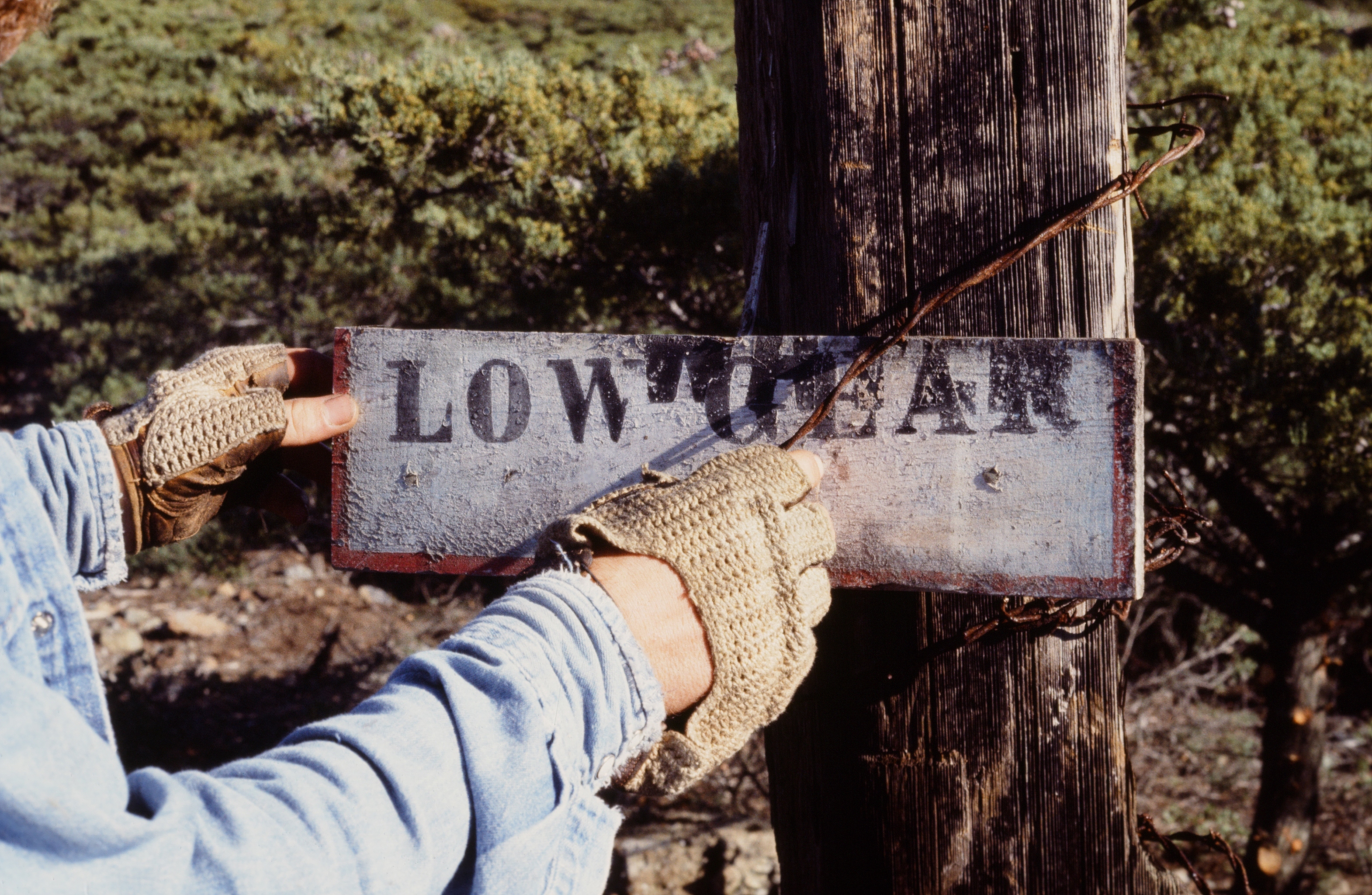
But by that point, a spark had been lit, and mountain biking was on its way to becoming part of the mainstream cycling culture. Professionalisation soon followed, while the UCI Mountain Bike World Championships (1990) and mountain bike’s place at the Summer Olympics (1996) all happened within 20 years of the first Repack.
A LANDMARK ANNIVERSARY
To commemorate the 50th anniversary of Repack’s first race, the Mountain Bike Hall of Fame, which includes several of the original Repack pioneers including Charlie Kelly, Otis Guy and Wende Cragg, held its 2026 induction ceremony alongside the Golden Arrows Awards.
Hosted in Lake Placid, New York (USA) on the same weekend as the final round of the 2026 WHOOP UCI Mountain Bike World Series, it was the first time that the ceremony had been held outside the Marin Museum of Bicycling, California (USA) since 2015.
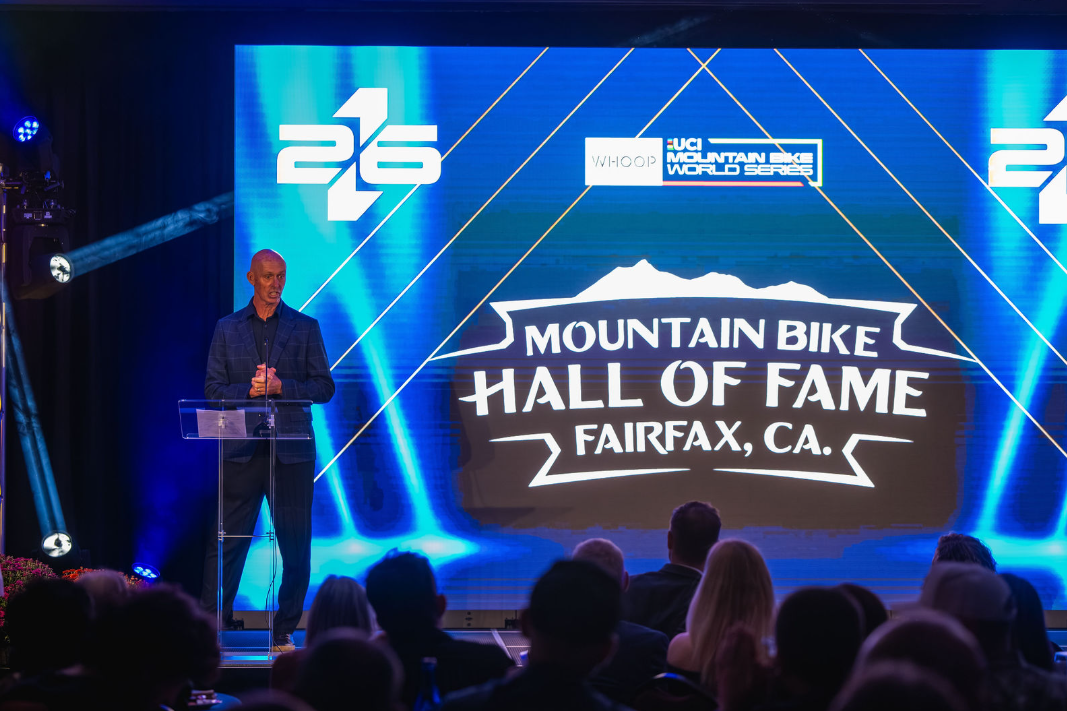
Kelly, Guy, Cragg and Jacquie Phelan all made the journey across the United States for the event and were involved throughout the whole UCI World Cup weekend.
“We were treated like bike royalty for our early contributions, ringing final-lap bells and presenting awards,” says Cragg, who was the only woman to ever race Repack and her photography documented the sport’s early days. “The fearless, superhero-strong racers wowed me, especially downhill, where seconds separated first and second – a far cry from our denim-clad ’70s gang.”
Half a century on, Kelly concludes that the “courses have evolved to the point where I can’t do it anymore”, but the influence of Repack is clear and can still be felt at every UCI Mountain Bike World Cup round.
Pictures: © Wende Cragg